


Ghiţa Ionescu (b. 21 March 1913, Bucharest – d. 28 June 1996, London) was a British political scientist of Romanian origin who stood out during the 1960s as one of the most influential specialists in the study of Romanian communism in the West for his comprehensive monographs on the first two decades of the communist regime in Romania. He also manifested a vocal critical attitude towards the communist dictatorship in Romania, either as the head of the Romanian service of Radio Free Europe during the late 1950s and early 1960s, or as a British political analyst specialising in the study of East European issues.
Born into a Romanian middle class family in Bucharest, he graduated in law from the University of Bucharest and followed a career in diplomacy. During the 1930s, he published in the left-oriented Romanian press such as Era Nouă and displayed an anti-fascist attitude. In 1947, when the communist takeover in Romania was in its last stages, Ionescu was a member of the diplomatic staff of the Romanian Embassy in Ankara. Ionescu chose not to return to Romania, preferring to join the Romanian exile in the West, where he was involved in Romanian anti-communist organisations such as the Romanian National Committee. The latter was founded in 1949 by Romanian former politicians in exile and claimed to represent the legitimate political leadership of the country, hoping that the West would “liberate” Romania from communist dictatorship and reinstall the interwar democracy. Ionescu was its secretary from 1955 to 1958. From 1959 to 1963, he was the head of the Romanian service of Radio Free Europe (1959–1963). At Radio Free Europe, he accumulated an expertise in East European affairs which later was a good ground for building an academic career as specialist in the Eastern Bloc. He moved to the UK and obtained there an assignment to write a book about postwar Romania, a topic on which at that moment there were no comprehensive contributions in the West. This book was published in 1964 by Oxford University Press under the title: Communism in Romania. 1944–1962 and is considered a classic monograph on the first two decades of postwar Romania. This contribution, alongside his second book entitled: The Reluctant Ally: A Study of Communist Neo-Colonialism (1965), which was among the first to analyse the Romanian communists’ split with Moscow, asserted him as a renowned specialist in the study of communist regimes in Eastern Europe. Later on, he extended his fields of research into various areas such as the comparative study of communist regimes, European integration, and populism. Among his most appreciated contributions on these topics may be mentioned: The Politics of the European Communist States (1967); Opposition: Past and Present of a Political Institution (co-authored with Isabel de Madariaga; 1968); Populism: Its Meaning and National Characteristics (edited by Ghiţă Ionescu and Ernest Gellner; 1969). Comparative Communist Politics: Studies in Comparative politics (1972); Between Sovereignty and Integration: Introduction (edited by Ghiţă Ionescu; 1974).
Ionescu taught political science at the University of Manchester and at the London School of Economics. At the latter, he launched in 1965 together with the historian Isabel de Madariaga the academic journal Government and Opposition. Ionescu was also involved in the activities of professional associations of political scientists and became chairman of the research committee on European Unification of the International Political Science Association.
Ionescu’s contributions on Romanian communism did not only open new research fields in Western academia, but also represented a foundation on which post-1989 Romanian historiography dealing with the recent past developed. As the political scientist Vladimir Tismăneanu has emphasised, Ghiţă Ionescu was not only an internationally appreciated specialist on East European affairs and a role model for the post-1989 generations who embarked on the study of political science, but also an “academic with a deep ethical vocation,” who dedicated his entire life to promoting democratic values (Tismăneanu 2013). In this respect, he was also a source of inspiration for post-1989 Romanian civil society.
-
Location:
- London, United Kingdom
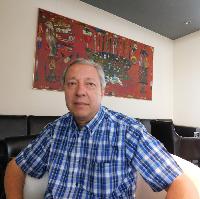
Lucian Ionică (b. 28 March 1952, Timișoara) is one of the cultural personalities of the city of Timișoara. After attended high school in his home city, he studied at the Faculty of Philosophy of the University of Bucharest (1972–1977). Also in Bucharest, he undertook postgraduate studies in film direction and editing at the Academy of Theatre Art and Cinematography. He also has a doctorate in philosophy from Babeş-Bolyai University in Cluj-Napoca, awarded in 1999 for a thesis on “The Epistemological Aspects of the Visual Image.” From 1980 to 1990 he was a maker of documentary films at the University of the West in Timişoara, and then a sociologist at the same university for the following two years. Since 1992, he has taught in the Journalism section of the same university. For more than a decade, starting in 2004, he was also director of the regional studio of Romanian Television in Timişoara.
Lucian Ionică is the author of a number of books and substantial studies, and has made more than 40 documentary films, which have often won awards at important festivals in the field. Among the documentary films in which he has been involved, there is one that has a special historical value because it foregrounds witnesses to the Romanian Revolution of December 1989 in Timişoara. The film is entitled Li-ber-ta-te, li-ber-ta-te! (Free-dom, free-dom!), and is to be found in the videotheque of the Memorial to the Revolution in Timişoara. “In the first days of January 1990,” says Lucian Ionică, giving a short account of how this film was made, “I received a phone call from Iosif Costinaş – the famous investigative journalist from Timişoara who disappeared in suspicious circumstances and was declared dead fifteen years ago [in 2002] – who called me to come and meet him and said: ‘Let’s film some interviews with participants in the Revolution.’ He got hold of a video camera, we went to the offices of the magazine Orizont, all very conspiratively, shut ourselves in a room there, and began to film. Over three days we made filmed interviews. Six or seven hours, raw film material. I think there were six people interviewed. We filmed on VHS cassettes, a support that didn’t allow the storage of video images of very good quality; but we chose to do this because, at that time, in January 1990, were especially interested in the information, not necessarily in the accuracy of the video frames.
His passion for photography and his vocation as a teacher of journalism and a collector came together for Lucian Ionică in a project of synthesis aimed at making an archive of the stories of other photographers who took snapshots during the days of the Revolution of December 1989 in Timişoara. This resulted in nine individual stories recorded in three ample studies; Lucian Ionică, “Fotografi ai revoluţiei,” in Mass-media, represiune şi libertate, ed. Lucian-Vasile Szabo (Arad: Editura Gutenberg, 2010), dealing with Ştefan Iordănescu, Ladislau P. Gagy, and Ion Roman; Lucian Ionică, “Fotografi ai revoluţiei (II),” in Memorial 1989 1(11), 2013, presenting Doina Benea, Liviu Butoi, and Gheoghe-Martin Copăceanu; and Lucian Ionică, “Fotografi ai revoluţiei (III),” in Memorial 1989, 1(15), 2015, the final part of this trilogy, covering Constantin Flondor, Petru Teleagă, and Mircea Radu.
Lucian Ionică is also the principal editor of a large-scale project, Enciclopedia Revoluției din Timișoara (The encyclopaedia of the Revolution in Timişoara), the publication of which began with the twenty-fifth anniversary of the events. The Encyclopaedia is in three volumes, which appeared between 2014 and 2016, totalling over 1,000 pages. Lucian Ionică was the coordinator of the first volume, which includes a detailed chronology of the events in Timişoara in the period 15–22 December 1989, together with updated details on the victims of the Revolution. It is a work addressed to the general public, and offers information about those dramatic days in an accessible and succinct form, with the aim of helping its readers to discern what is essential out of the multitude of available data, some of it contradictory, but also of reminding them that there are still questions that remain to be answered. “December 1989 was a unique moment in our lives and in the history of our city. People died then, in places where today we walk in peace. Gradually the memory of those days will be reduced to a commemorative ceremony. I don’t believe it is enough to pay homage to them only occasionally in words. In memory of their supreme gesture, we must try to obtain a better understanding of what happened then. One form of recognition not only on our part but also on the part of those yet to come is a detailed knowledge of those clashes in which some became heroes, others were participants, and others mere spectators,” says Lucian Ionică about the meaning of this substantial editorial project.
As regards communism, Lucian Ionică is of the opinion that “at that time, communism was a given, just as it was a given that sun rose in the east and set in the west. Like it or not, that was the situation. Under those conditions, you tried to find a way of living as normally as possible. You saw those who tried to rise in the social hierarchy through politics – pushy types, eager to rise very fast. And you had a certain reaction of disapproval. You knew you could be listened to, you could be informed on – and so you protected yourself and only talked openly with friends that you trusted. You created a space of freedom for yourself. And you tried to find a community in which you could be yourself without restrictions. I was lucky to have two such communities: there was the cine-club, cinematography area – I had the good fortune to get into that in 1968, an important year for Romanian communism, because it was then that Nicolae Ceauşescu made his declaration of distancing in relation to the invasion of Czechoslovakia by Soviet troops. The second little opening was the area of science fiction, of the literary cenacles. I was a founding member of the Timişoara H.G. Wells Cenacle and the Science Fiction Cenacle Helion. These were forms of equilibrium, spaces of freedom.” Lucian Ionică was a Party member, but a passive one, who never wished to use this political membership in order to stand out, but only to follow a “normal” professional career, without the restrictions that would have resulted from a refusal to enter into this mass organization, which by 1989 had come to have almost four million members: “I was a Party member, because during university studies we were told that if you didn’t become a Party member you couldn’t do anything professionally. It was a sort of given and, for very many people, it was just a formality.”
Above all, the revolutionary days that led to the change of regime in 1989, the days in December 1989 in which Lucian Ionică was out in the streets in Timişoara, are for him unforgettable: “The spirit of those days was something amazing. I think I experienced then the greatest joy, the most intense joy in my life. There was also a little fear, but above all there was this overwhelming joy. I realized that things could never go back, that here, communism had fallen. Finished! I felt that there would be something else and I hoped that it would be much better. What I experienced then was an utterly special state, during those days in the streets of Timişoara. When I saw 100,000 to 150,000 people in Victory Square, I knew that communism was finished, it would fall, it had no future. The expressions on people’s faces had changed; they were all experiencing those moments of joy, of euphoria, of solidarity, of fraternity. It was amazing, absolutely amazing.” Lucian Ionică doubles and strengthens this confession with another: “If there was something that stood out for me then, if there was something, how to put it, really striking, then it was this: the fact that the people were united. And they all wanted, back then, the same thing. Not only did they want the same thing, but they also expressed this and acted openly to the same end and in the same direction. They didn’t hide; they were already living in complete freedom. And this seemed to me almost miraculous. It was everything that hadn’t been done until then. Before December too, people would grumble; you would hear this or that person, that they didn’t like the life they were living in communism, but now it was firm, clear, straight, in the open, out loud, in full acceptance of the risks. There was no going back; there was the feeling of freedom. Of course there was also great sorrow at that time for the people who died, for those who were wounded. The sorrow of having lost so many people and the miracle of living in freedom…”
-
Location:
- Timișoara, Romania

Cornel Irimie (born 17 January 1919, Sibiu – died 22 March 1983, Sibiu) was a Romanian sociologist, ethnologist, and museologist who in 1963 established the Museum of Folk Technics (Muzeul Tehnicii Populare) in Sibiu, which was later renamed the ASTRA National Museum Complex (Complexul Naţional Muzeal ASTRA or, in short, Muzeul ASTRA). He is also known for his extensive ethnographic research, which he conducted from the 1950s to the 1970s mainly in Transylvanian villages. Irimie was born in a family with peasant roots in southern Transylvania. After graduating from high-school in Sighişoara in 1937, he chose to study rural sociology and ethnography at the Faculty of Letters and Philosophy of the University of Bucharest. He was a disciple of the Romanian sociologist Dimitrie Gusti, considered the creator of the school of sociology at the University of Bucharest in the interwar period. In the period 1938–1940, he took part together with Gusti in field research that gave him the opportunity to assimilate the methods of monographic research. As defined by Gusti, the methodology of monographic research includes the multi-disciplinary approach of a “special unit” through field research conducted by mixed teams consisting of sociologists, geographers, historians, linguists, economists, folklore collectors, and physicians. Given Gusti’s appreciation of Irimie, the latter was included as a student in his team at the Institute for Social Research of Romania (Institutul de cercetări sociale al României), where he worked as a researcher from 1938 to 1940. On Gusti’s recommendation, he received a doctoral scholarship at the University of Jena (Germany) where he studied between 1941 and 1943. This scholarship prevented him from participating, alongside most of Gusti's disciples, in field research in Soviet Transnistria while it was occupied by Romanian troops during the Second World War. He finished his doctoral studies in 1948 after defending his dissertation entitled “Inter-village Social Relations in the Olt Land” (Relaţiile sociale intersăteşti din Ţara Oltului) coordinated by Professor Gusti at the University of Bucharest.
However, during the communist period, Irimie concealed his close association with Gusti, who had been purged from the university, as well as his former sympathies for the extreme right party of the Legion of the Archangel Michael. This camouflage was possible because, given his young age in 1938–44, Irimie had not held any key position in the government apparatus of the right-wing dictatorships that had succeeded each other in this period in Romania. In comparison, other Romanian sociologists who had been active in the interwar period had a different fate regardless of their political orientation. For instance, the left-oriented Anton Golopenţia and the enthusiastic supporter of the Romanian extreme right Traian Herseni, who had both been active in the sociological campaign in Soviet Transnistria, were both purged and arrested; the former died while imprisoned, while the latter spent years in prison before being released. In contrast, Irimie was hired in 1945 by the Ministry of Arts as an abstractor for matters pertaining to the rural world, and later, in 1952–1953, acted as head of the folk art section at the Decorativa factory in Bucharest. In 1953, he moved back to his native town of Sibiu, where he was hired as an assistant researcher at the Brukenthal Museum, one of Romania’s most prestigious art museums. Irimie’s departure from Bucharest also helped him to break with a problematic past, including his association with Gusti’s sociological school and his former sympathies for the Legion of the Archangel Michael. At the Brukenthal Museum, he steadily climbed the hierarchical ladder. He became a researcher in 1955, head of section a year later, assistant scientific director in 1967, and finally director of the Museum in 1969. His research activity was held in high regard by research institutions in communist Romania. From 1956, Irimie acted in parallel with his position at the Brukenthal Museum as a researcher at the Romanian Academy’s Centre for Social Studies in Sibiu and as a collaborator of the Academy’s Institute for Art History. In 1969, after the establishment of the Sibiu division of Babeş–Bolyai University in Cluj, he became a Senior Lecturer at its Faculty of History and Philology, where he lectured in ethnography and museum studies from 1969 to 1973. The leading positions Irimie held at cultural institutions in Sibiu and the authority he enjoyed within the regime’s academic structures allowed him to conduct research that was apparently incompatible with the official cultural policies. More precisely, throughout the 1960s, Irimie carried out field ethnographic work on religious practices among rural communities in Transylvania, acquired icons on glass for the Brukenthal Museum, and wrote studies on the art of painting icons on glass. Some of these studies were able to be published at the end of the 1960s in the context of the relative cultural liberalisation that occurred during the first years of the Ceauşescu regime.
Irimie’s major achievement, however, was the establishment of the Museum of Folk Technics in Sibiu in 1963 as a division of the Brukenthal Museum. The support he received from the local and central authorities for opening an ethnographic museum in Sibiu, for which they granted a large piece of land on the outskirts of the city, indicates that Irimie was definitely not in conflict with the regime, but rather capable of taking advantage of the ideological changes in order to consolidate his professional career. His national and international academic prestige in a field like ethnography and folklore, which had become instrumental for the nationalist propaganda of the Romanian communist regime, must have contributed to the privileged relations he maintained with the local and central authorities. Nonetheless, according to his son Radu Nicolae Irimie, he was kept throughout his life under the attentive surveillance of the Securitate, which is not surprising given the problematic past that he tried hard to conceal. At the same time, Irimie was allowed to hold leading positions in internationally visible Romanian cultural institutions, which indicates that he was ultimately a person who acted in the space between tolerated and supported.
The Museum of Folk Technics was in fact a museum of Romanian rural civilisation conceived according to the ideas of Gusti and his sociological school. The establishment of this open-air museum meant that many artefacts of Romanian rural civilisation, such as traditional houses, mills, tools, and peasant home interiors, which would have otherwise been destroyed by the communist regime’s rapid modernisation of agriculture and villages, could be rescued and exhibited there. Irimie tirelessly supported the acquisition of many religious artefacts such as icons, triptychs, and crosses. Even though they were not exhibited during the communist regime, Irimie acquired them, thus running the risk of being sacked from the institution. In addition, under his coordination, the employees of the Museum of Folk Technics were also able to conduct field research on religious customs and beliefs in villages. The research findings can be found in the archival collections of the ASTRA Museum.
-
Location:
- Sibiu, Romania
Livia Irimie (born 11 December 1921, Mediaş, Romania – died 25 February 1999, Sibiu), the wife of the sociologist and ethnographer Cornel Irimie, was brought up in a Romanian-German cultural milieu in the Transylvanian towns of Mediaş and Sighişoara. From 1956 to 1967, she worked as secretary at the Romanian academy, Sibiu Branch. Due to the fact that her mother was a Transylvanian Saxon, she had a good command of German. Thus, in 1967, she moved to the Brukenthal Museum in Sibiu where she worked in the library of the museum, which had in its keeping one of the largest collections of old books in German in Romania. She supported her husband, Cornel Irimie, in his research activity by typewriting his manuscripts and proofreading as a native speaker his studies written in German. She also took care of his intellectual legacy and later, in the period from 1991 to 1992, she put into practice his will that his collection should be transferred after his death to the ASTRA Museum in order to be available for further research. Because she was neither a public person nor a holder of a key positions in the cultural institutions where she worked, Livia Irimie did not attract the interest of the party structures or the Securitate.
-
Location:
- Sibiu, Romania