

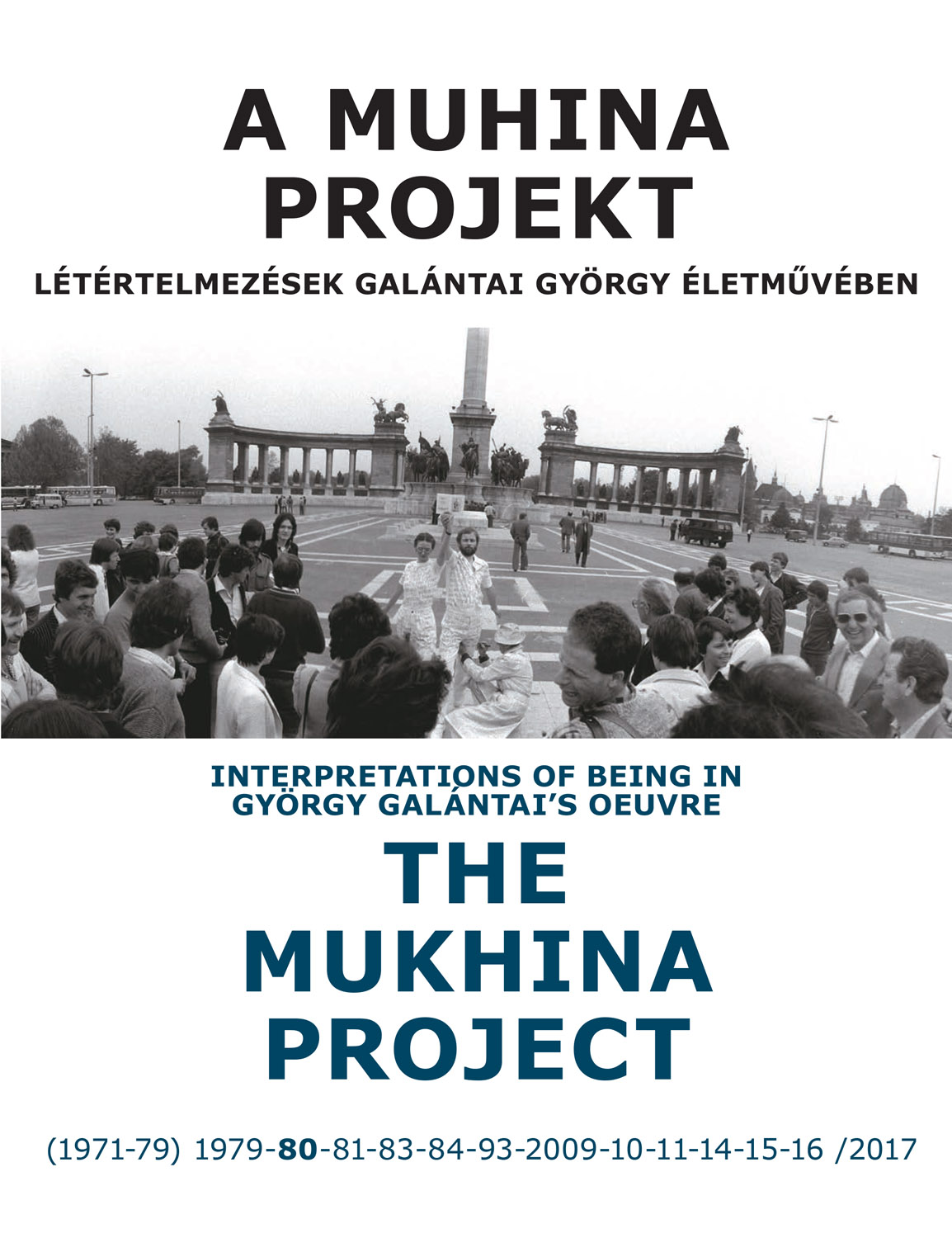
 Klaniczay, Júlia. The Mukhina Project, 2018. Book
Klaniczay Júlia (ed..): A Muhina projekt. Létértelmezések Galántai György életművében / The Mukhina Project. Interpretations of Being in György Galántai's oeuvre, Vintage Galéria, Budapest, 2018, 146 p.
This book, which includes numerous photographs, places the performance “Homage to Vera Mukhina” in a theoretical, historical, and cultural context. Along with the photos, there are diary entries, reproductions of Galántai’s related artworks, and text excerpts and documents originating from Cavellini. There is an interview with Galántai which leads the reader through the book (editor: Júlia Klaniczay). The book offers insights into the creation and execution of the Mukhina performance and also a wider and more detailed picture of connections within the oeuvre. Galántai has always reflected on the world around him and the most important questions in concrete artworks, thus giving interpretations of being.

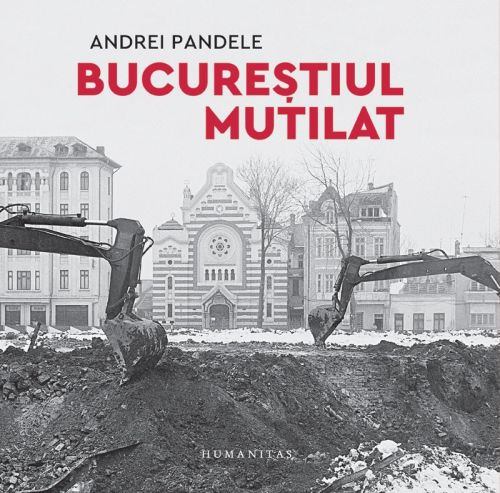 Publication: Pandele, Andrei et al. Bucureștiul mutilat (Mutilated Bucharest), 2018. Album
The book-album Bucureștiul mutilat (Mutilated Bucharest, 2018) offers an anthology of over 150 photographs taken by Andrei Pandele and several dozen others by some of his friends and colleagues (Dan Vartanian, Dan Dinescu, Sorin Vasilescu, Peter Derer, Şerban Lăcriţeanu, Andrei Bîrsan, Nic Hanu, and Radu Ştefănescu). Through a photographic discourse of great visual and emotional impact, the book presents the most important landmarks in the terrible operation of mutilation and uglification of the capital in the last years of Romanian communism. It also draws attention, through some dozens of photographs, to some important aspects of everyday life during communism in the period 1975–1989, especially in Bucharest. “On the orders of a primitive and megalomaniac tyrant, more was demolished in peace time than that was destroyed by two world wars and two major earthquakes (those of 1940 and 1977),” states Andrei Pandele. Bucureștiul mutilat tells the story of many of the areas demolished according to the directions of the Ceaușescu couple, and is in a way an act of justice on the level of history inasmuch as the photographs in the book represent part of the memory lost and the beauty destroyed, savagely, in Bucharest by communism. In short, it is a photographic commemoration of the destructions ordered by the officials of the communist regime in the 1980s, as a consequence of which a large part of the centre of the capital was truly mutilated. In basic, concrete terms: 5.86 km2 of the historic centre demolished; 1.66 km2 turned to waste ground overgrown with weeds; approximately 20,000 properties destroyed; over 60,000 families forced to move; 19 streets blocked or no longer existing at all; Orthodox churches, monasteries, synagogues, and other monuments wiped from the face of the earth; eight churches translated and hidden among apartment blocks. The book Bucureștiul mutilat was published, to a high graphic standard, at the most prestigious publishing house in Romania, Humanitas, and enjoyed considerable public and media exposure. The principal moment of public debate regarding the volume was moderated by Cristian Pătrășconiu, a researcher in the COURAGE H2020 project.
 The Orpheus of Novi Sad – The Vojvodinian Új Symposium (1965-1992), 2018
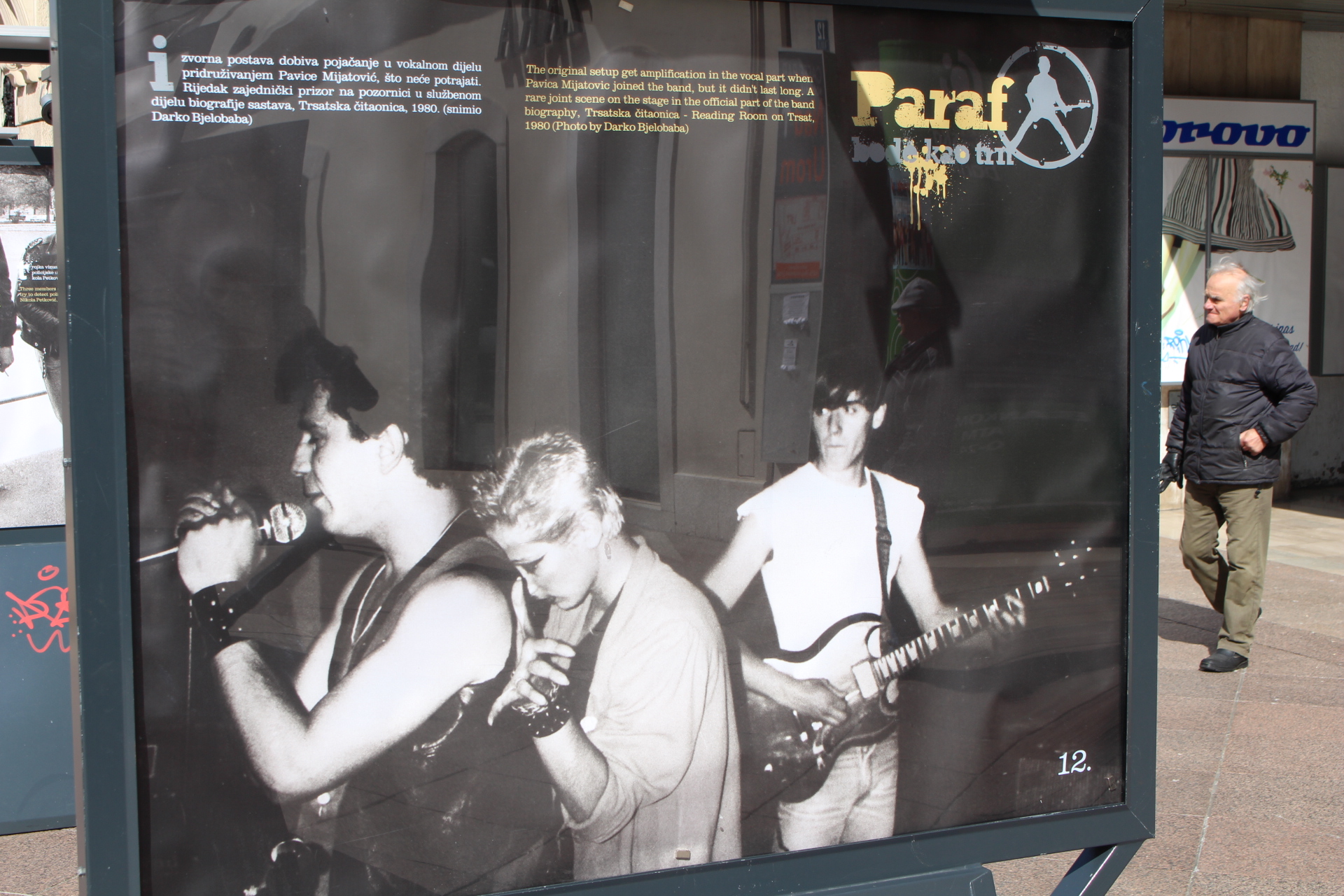 Exhibition: Paraf-stings like a thorn, 2018
In March 2018, at the initiative of Velid Đekić, the exhibition "Paraf - bode trn" was organized for the fortieth anniversary of the first official concert of the Rijeka punk band Paraf. During his work as a journalist and cultural affairs writer, Đekić collected numerous photographs, cover sheets and other documents about Paraf. With the help of designer Mladen Stipanović and with the financial support from the Rijeka City Cultural Department, Đekić set up twenty large bilingual display boards with photographs that represent the development of the punk band of Paraf. Although an exhibition catalogue was not compiled, the exhibition was well covered by the media.
Punk band Paraf, whose first line-up was consisted of Valter Kocijančić, Zdravko Čabrijan and Dusan Ladavac, held his first performance in the premises of the Circolo Italian Cultural Club on 22 March 1978. This event is considered one of the breakthrough moments for rock in Rijeka and Yugoslavia. Along with Slovenian band Pankrti, Paraf is considered to be one of the first punk bands in the European socialist countries.
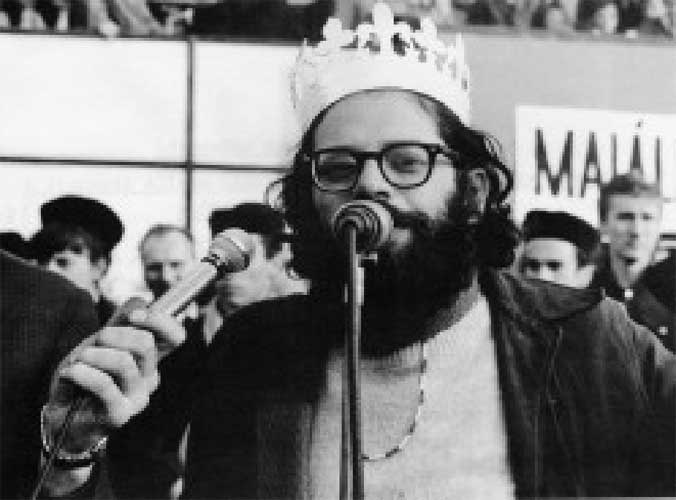 Exhibition: Allen Ginsberg - King Majales
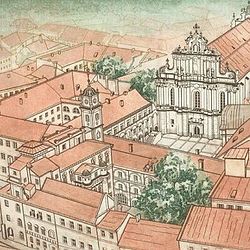 Students Science Society of Vilnius University
Almost every high school in the Soviet Union had a student scientific society. The aim of these organisations was to raise the new generation of researchers and lecturers, and popularise studies among young people, developing the ideological side of their views. Some student organisations went beyond these formal aims. In the late 1970s and 1980s, members of the Student Scientific Society of History at Vilnius University made attempts to look at new topics for research, discussions and presentations at conferences, which were not strictly forbidden, but also not approved and supported by the government of that time. The collection was formed after an interview with Vytautas Umbrasas, the leader of the Student Scientific Society at Vilnius University.
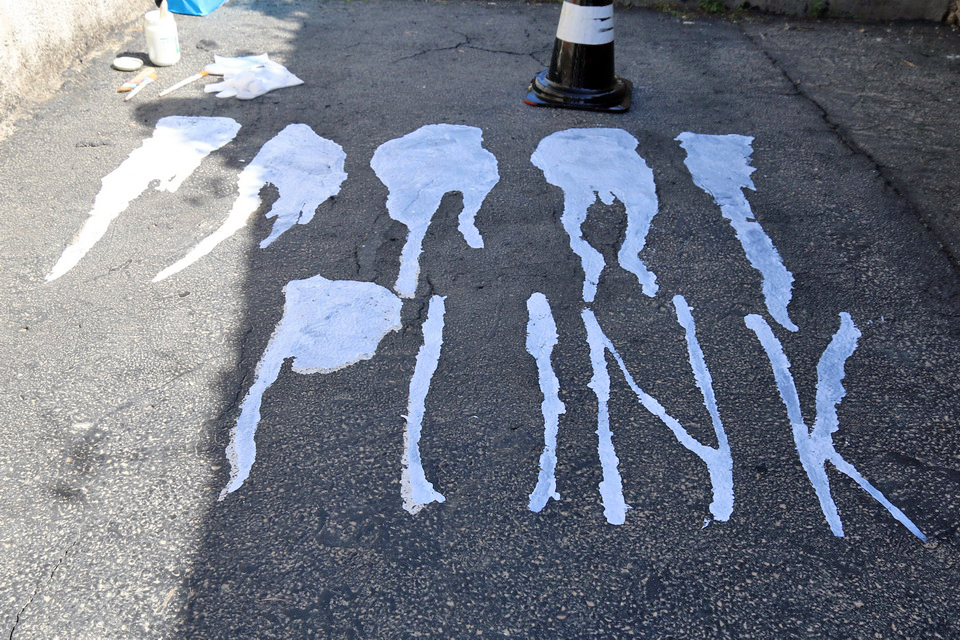 Event (general): Restoration of the graffiti in Rijeka made by members of the punk band Paraf at the initiative of Velid Đekić, 2018
The members of the punk band Paraf in 1977 wrote "Paraf/punk" as graffiti on a stairway in Rijeka. At the initiative of Velid Đekić, in 2018 this graffiti was protected by the Rijeka city council as a cultural property of local significance. The City of Rijeka also paid for the restoration of graffiti. Thanks to Đekić, graffiti is today considered a monument that marks the beginning of the punk counterculture in Rijeka. Graffiti is, with its coarse appearance, fully consistent with the principles of the punk rock movement that wants to disrupt imposed social boundaries.
Since the graffiti was created before the first official concert by the punk band Paraf, it may be concluded that with this graffiti the band wanted to herald the emergence of a new musical expression, i.e. the change that punk rock signified on the Rijeka music scene at the time. How much ahead of its time this was is reflected in the fact that today graffiti is considered a part of pop culture and is used regularly to announce or criticize socially significant events.
